
A Victorian pet portrait can feel formal, decorative or gently humorous. Start by choosing whether you want period clothing, an ornate surround, or a quiet painted portrait suitable for your room.
Browse the Gallery Oil look for a digital painted option. PawCinema does not currently offer a dedicated Victorian outfit or custom period-costume editor.
A softer decorative alternative
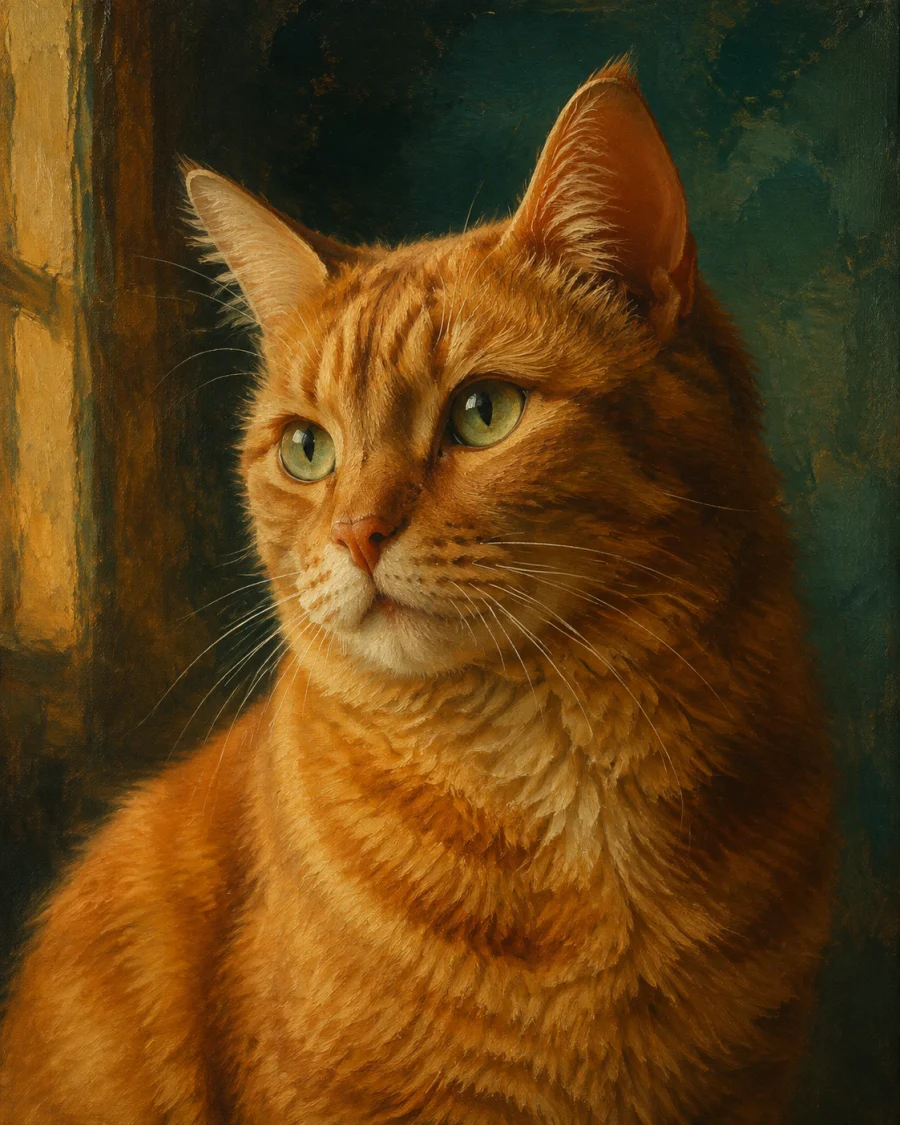
Compare Gallery Oil's painted setting with Art Nouveau's botanical curves and print-like color. These digital alternatives do not include period clothing; Art Nouveau is not presented as a historically accurate Victorian treatment.
 Gallery Oil →
Deep color, linen texture and the presence of a real painting.
Open Gallery Oil in the studio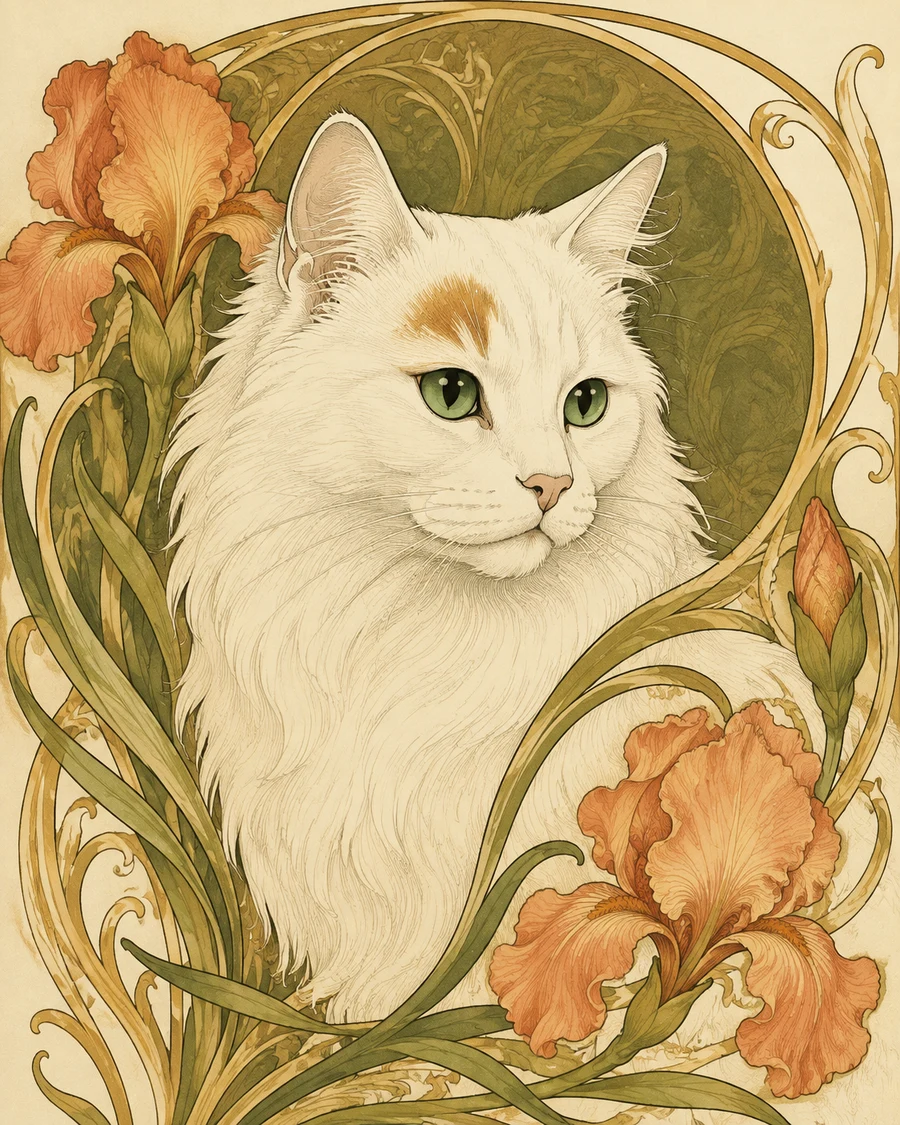 Art Nouveau →
Flowing iris stems and elegant ink contours on ivory paper.
Open Art Nouveau in the studioThe sample pets show art direction, not customer results. Each studio link keeps the treatment you selected and shows its credit cost before generation. Your authorized original supplies the pet's face and markings; preview the result once preparation and safety checks finish. Public sharing is optional, and a paid credit top-up unlocks original downloads without a likeness confirmation step. A physical print, frame or costume is not included.
Build a portrait brief that is easy to understand
Tell a commissioned artist which details are essential: the pet's expression, coat markings, portrait crop and preferred colors. Separately describe optional decoration. A recognizable face deserves priority over a complex collar or background.
A useful brief might read: “Please keep the face and markings from this photo, use a restrained formal setting, and show me the crop before making the final print.” Add costume requirements only when the chosen service supports them.
Victorian animal portraits: choose the format first
| Format | Useful when | Check before ordering |
|---|---|---|
| Digital painted portrait | You want a file to save or share | Download dimensions, crop and usage terms |
| Printed artwork | You want something ready for a wall | Paper or canvas, frame size and shipping |
| Original commission | You want an artist's physical brushwork | Medium, timeline and revision process |
Photo tips for a formal pose
Choose a clear sitting or standing photograph with visible ears and eyes. Avoid forcing your pet into a costume for the reference. The photograph is most useful when its natural facial proportions are easy to see.
Compare Renaissance portraits and royal portraits before deciding how much historical staging belongs around your pet.