
A pet memorial portrait can be a quiet way to keep a familiar face close. You do not need to write a story about your loss or choose a dramatic scene. A photograph you love is a meaningful place to begin.
Explore a watercolor pet portrait for a soft painted direction, or Gallery Oil for richer texture. The result is a digital keepsake; you decide whether it feels like your pet.
Two painted directions to consider
Soft Watercolor combines light washes and visible paper with a carefully painted face. Gallery Oil uses deeper color and bristle texture. Choose the treatment you would like to live with; neither adds an inscription or requires you to describe your loss.
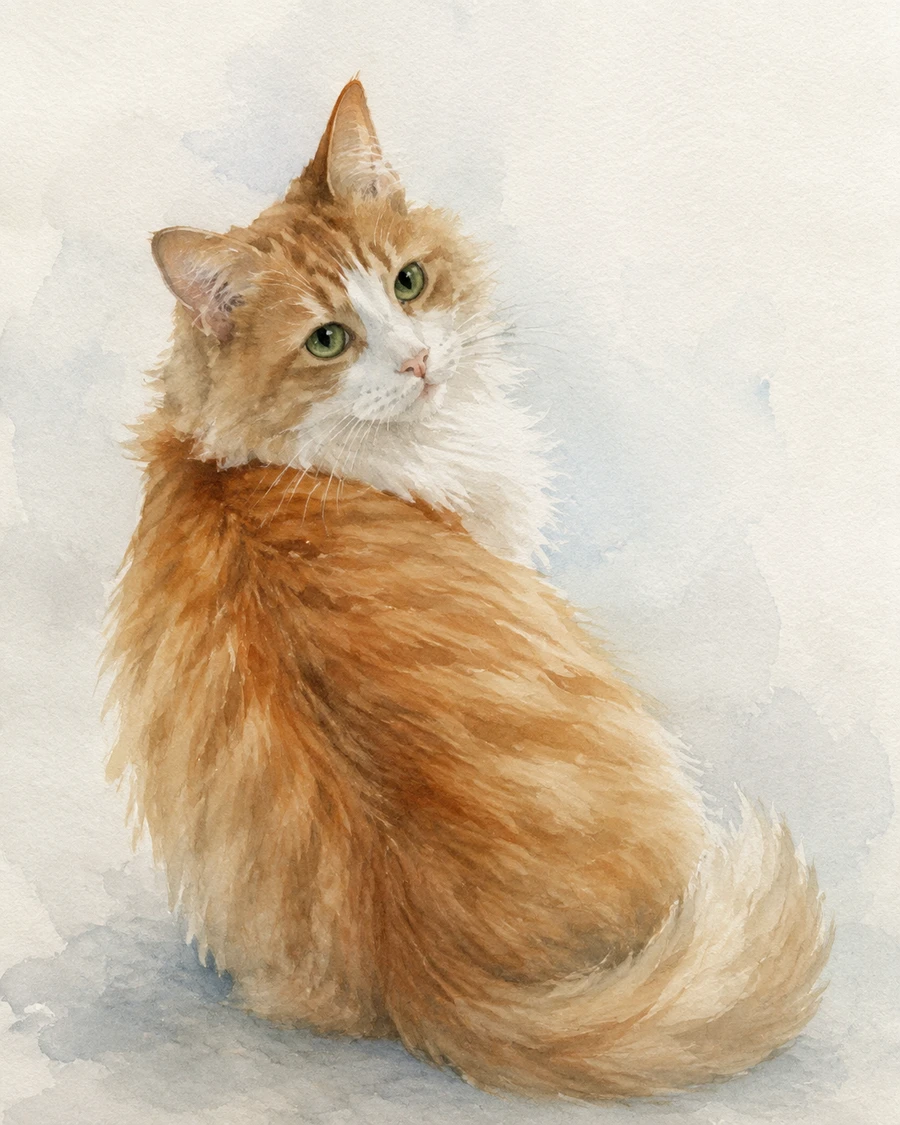 Soft Watercolor →
Transparent layered washes, luminous paper and carefully painted focal detail.
Open Soft Watercolor in the studio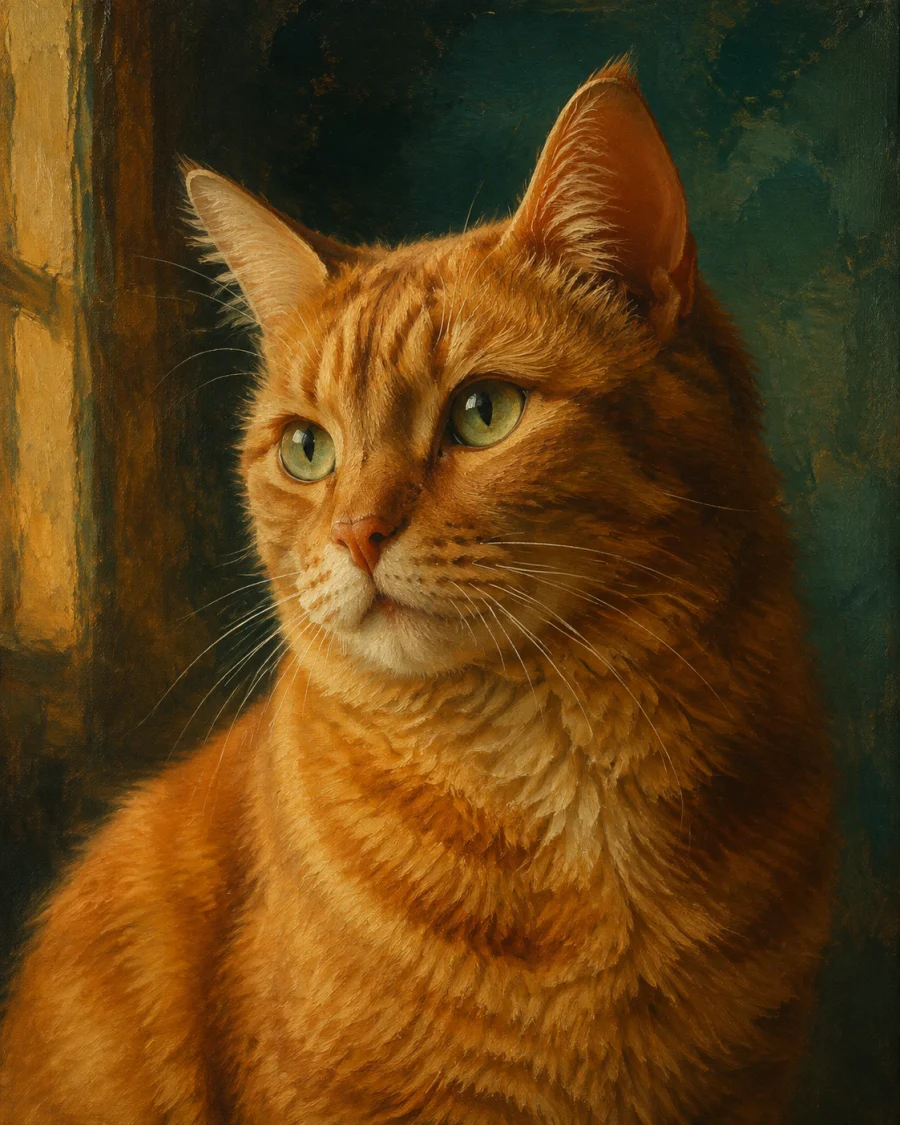 Gallery Oil →
Deep color, linen texture and the presence of a real painting.
Open Gallery Oil in the studioThese sample pets illustrate the styles, not customer memorials. You can browse before signing in. If you choose to create, the studio shows the credit cost and asks for photo-processing consent before generation.
Choose the photo you recognize, not only the sharpest one
Start with an authorized original that shows the expression and markings you remember. A technically perfect photograph may feel less personal than an everyday image. If the image is small, try to find the original file rather than a screenshot or social-media download.
Old photos and clear scans can be a starting point, but missing detail cannot be treated as a verified feature. Keep the original safe regardless of whether you make a portrait.
Dog memorial portraits and cat memorial portraits
For a dog memorial portrait, look for the familiar ear shape, muzzle and patches around the eyes. For a cat memorial portrait, check eye color, face outline and distinctive markings. A peaceful palette does not need to change those features.
PawCinema supports one cat or dog per portrait. It does not require a medical history, date of loss or memorial inscription.
When the portrait is a gift
Ask whether the recipient would welcome a portrait and which photograph they prefer. Give them room to choose the style and timing. A private digital image may be easier to receive than a surprise framed piece with an inscription they did not select.
Review and keep your result
Choose a style, see the disclosed generation cost, and preview the image once preparation and safety checks finish. A paid credit top-up unlocks original downloads. Likeness feedback is optional. Likeness feedback does not automatically create another image or reverse credits; the current remedy terms explain technical non-delivery.
Once preparation and safety checks finish, preview your portrait online. Public sharing is optional; a paid credit top-up unlocks original downloads for safekeeping. A physical print or frame is a separate purchase. You can also simply keep the original photograph: making a new image is always optional.
Pet memorial portrait questions
Can I use an old photograph of a pet who has died?
Yes, if you have permission to use it and the face is clear enough to recognize. Compare your originals or scans for visible eyes, muzzle, ears and markings. If only a blurry photo remains, a generated detail cannot establish what was missing. The photo checklist can help you decide whether to start.
Which style should I choose for a dog or cat memorial portrait?
Choose the treatment you would like to keep nearby: Soft Watercolor for light washes or Gallery Oil for denser painted color. A memorial does not need a somber palette, costume or inscription. Check the available style in the studio and judge the actual result against your original.
Can I see a real original photo and finished portrait first?
See Duoduo’s generated watercolor portrait. It is a generated artwork of our founder’s cat: one generation, 20 credits and a clean 1122 × 1402 PNG. It is not a memorial commission or evidence of another owner’s experience. This page’s style samples are concepts, not customer memorials.
Does the memorial portrait include a name, dates or a frame?
No. The current offer is one digital portrait of one cat or dog. It does not include an inscription, print, frame or shipping. Keep any exact name or dates in an accompanying note, or agree a separate printed layout with a provider who explicitly offers it.
Is a memorial portrait a good sympathy gift?
Ask whether the recipient would welcome one, and let them choose the photograph and timing. If they would rather keep their original photo, respect that choice. Only upload a photo you are authorized to use; a public social-media post is not automatic permission.